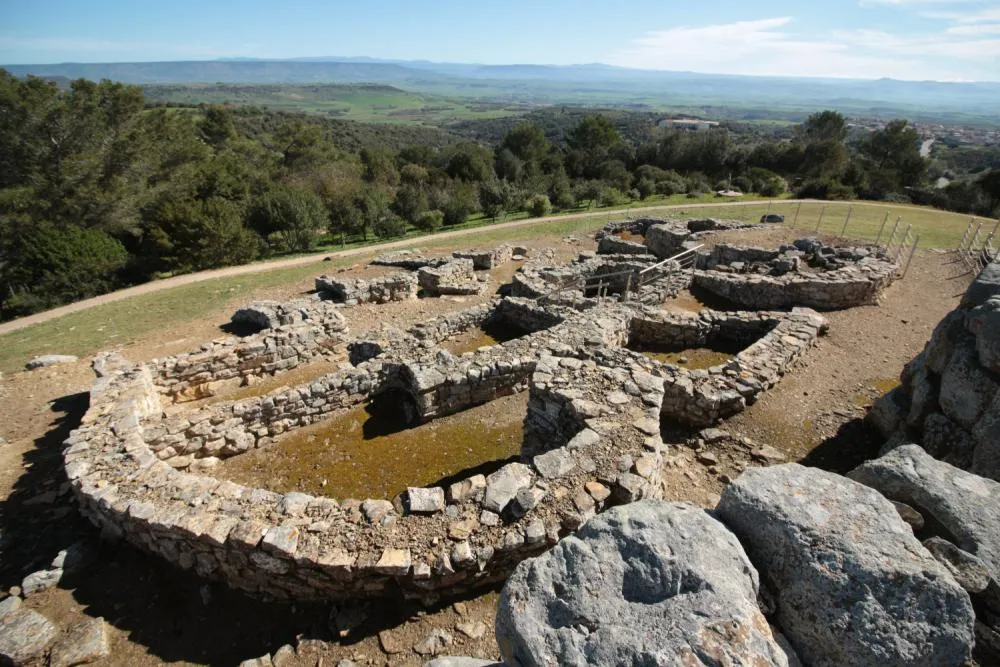

Bronze Age villages consisted of circular huts with stone walls and conical roofs made of wooden poles and boughs. During the Iron Age, domestic architecture underwent a change, with complex houses now built of stone and mud bricks with rooms arranged around a central courtyard. The village of Genna Maria was made up of about 40 rooms, and the materials found inside them during the archaeological excavations provide indications on how the spaces were used for various everyday activities, such as cooking, food storage, and sleeping. Several stone basins and areas for lighting fires can be seen in various parts of the village. These were communal spaces used for various subsistence activities. The excavations have also led to the recovery of charred barley and wheat seeds and grape seeds, which, together with the remains of domestic and wild animals and marine molluscs, provide proof of a complete and varied diet. The finds discovered in these rooms are comprised of all the ceramic, stone, and metal furnishings used for everyday activities. It is believed that the village of Genna Maria could have housed up to five families of about ten people.
Play the audio description of this content